Wildfire Icon: A Practical Design Asset for Web and Infographics
The Wildfire Icon is a minimalist, monochrome illustration commonly used in web design, templates, and infographics to represent natural disaster-related content. As part of a broader natural disaster icon collection, the Wildfire Icon offers a clear and visually consistent way to communicate fire-related themes in a variety of digital formats. Available in both EPS and JPG file formats, this icon is designed for ease of use and adaptability across platforms.
Understanding the Wildfire Icon
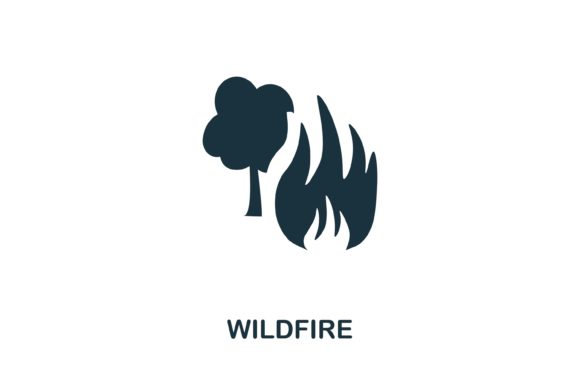
The Wildfire Icon typically features a stylized flame or fire element rendered in a single color. This monochrome design allows it to blend seamlessly into a wide range of visual themes without overwhelming surrounding content. Whether used in dashboards, warning alerts, or educational materials, the icon serves as a universally recognizable symbol of wildfire events or fire-related hazards.
As a vector-based asset (often provided in EPS format), the Wildfire Icon can be scaled without loss of quality, making it suitable for both high-resolution print and digital applications. The accompanying JPG version ensures compatibility with platforms that do not support vector files, offering flexibility for different design workflows.
Why Use the Wildfire Icon?
Designers and developers often seek icons that are both functional and aesthetically neutral. The Wildfire Icon meets this need by offering a clean, simplified representation that can be easily integrated into various contexts. Its monochrome nature allows for color customization, ensuring it aligns with brand palettes or thematic requirements.
- Clarity: The icon's simple design ensures quick visual recognition, even at small sizes.
- Consistency: As part of a natural disaster collection, it aligns well with other icons representing events like floods, earthquakes, and storms.
- Flexibility: The availability of both vector and raster formats supports a broad range of use cases, from mobile apps to printed reports.
Key Benefits of the Wildfire Icon
One of the primary advantages of using the Wildfire Icon is its ease of integration. Designers can quickly embed the icon into websites, dashboards, presentations, and infographics without requiring extensive editing. The EPS file allows for detailed customization in vector editing software, while the JPG version can be used directly in platforms that do not support scalable graphics.
Additionally, because the icon follows a minimalist design philosophy, it avoids visual clutter and remains effective across different screen sizes and resolutions. This makes it particularly useful in responsive web design and mobile applications where clarity and speed are essential.
Considerations and Tradeoffs
While the Wildfire Icon offers many benefits, it may not be the best choice for every project. Its monochrome style, while versatile, may lack the visual impact needed for applications requiring high emotional engagement or realism. In cases where a more dramatic or detailed depiction of a wildfire is necessary—such as in public safety campaigns or documentary materials—a more illustrative or color-rich image might be more appropriate.
Another consideration is licensing. While many icon sets are available under open licenses, it’s important to verify the usage rights associated with the Wildfire Icon to ensure compliance with project requirements, especially for commercial applications.
When the Wildfire Icon Is a Strong Fit
The Wildfire Icon is particularly well-suited for:
- Data visualizations: Representing wildfire occurrences in maps, charts, or statistical reports.
- Emergency preparedness materials: Used in infographics or informational websites to denote fire-related risks.
- Mobile and web applications: Icons that need to be scalable and adaptable across devices benefit from its vector format.
- Educational content: Teaching about natural disasters, environmental science, or emergency response planning.
In these scenarios, the icon’s simplicity enhances usability without distracting from the main content, making it an efficient and effective visual tool.
When Alternatives May Be Better
There are situations where alternative visuals might serve a project better than the Wildfire Icon. For example:
- High-emotion campaigns: If the goal is to evoke urgency or concern, a realistic image or animated graphic might be more impactful.
- Print-heavy branding: Some branding guidelines may require full-color or custom-designed icons that align more closely with existing visual assets.
- Specialized applications: In scientific or technical contexts, more specific or detailed imagery may be necessary to accurately convey information.
When evaluating alternatives, it’s important to consider the intended audience, the platform of delivery, and the overall visual tone of the project.
Practical Insights for Decision-Makers
Before selecting the Wildfire Icon—or any design asset—consider the following:
- Intended Use: Will the icon be used in digital or print formats? The EPS file is ideal for scalable digital use, while the JPG version is better suited for static images.
- Visual Consistency: Does the icon match the overall design language of your project? Monochrome icons like the Wildfire Icon work best in minimalist or flat design styles.
- Customization Needs: If you need to adjust size, color, or details, the EPS format allows for more flexibility than JPG.
- Target Audience: Consider whether the audience is likely to interpret the icon correctly. In some cases, additional text or context may be needed alongside the icon.
By aligning these factors with your project’s goals, you can make an informed decision about whether the Wildfire Icon is the right choice for your design needs.
Final Thoughts
The Wildfire Icon is a practical and versatile design element that offers clarity, scalability, and consistency for a wide range of applications. Whether you're building a data dashboard, creating an educational infographic, or designing an emergency preparedness website, this icon provides a straightforward way to represent fire-related content visually.
However, as with any design asset, it’s important to evaluate its suitability in the context of your specific project. By understanding its strengths, limitations, and alternatives, you can ensure that your choice supports both your visual goals and your audience’s comprehension.