Understanding the Role of Spine Icons in Modern Web Design
In today’s visually-driven digital landscape, icons play a critical role in enhancing user experience and streamlining communication. Among the many specialized icons available, the Spine Icon stands out for its relevance in health-related design projects, medical templates, and wellness-focused infographics. This article explores the practical applications, design characteristics, and usability benefits of the Spine Icon as part of a larger internal organs collection.
Whether you're building a healthcare website, designing an educational brochure, or creating a mobile app for physical therapy, having access to high-quality, monochrome vector icons like the Spine Icon can significantly improve the clarity and professionalism of your content. Let’s dive into what makes this icon a valuable asset for designers and developers alike.
What Makes the Spine Icon Unique?
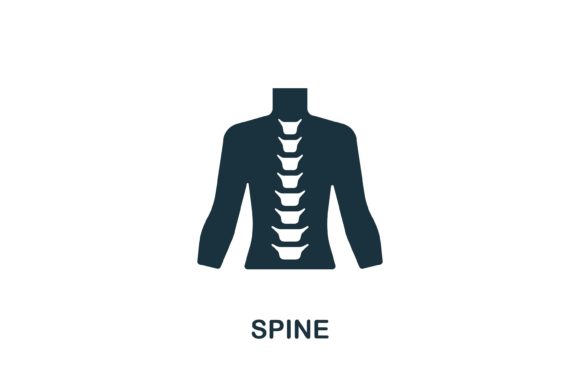
The Spine Icon is more than just a stylized image of a human vertebrae structure. It’s a carefully designed symbol that conveys meaning at a glance. Part of a broader internal organs collection, the Spine Icon is crafted to be both anatomically recognizable and stylistically versatile.
Its monochrome design allows it to blend seamlessly into a wide range of color schemes without overpowering the layout. This makes it especially useful for minimalist web designs, mobile applications, and print materials where clarity and simplicity are key. The icon is typically available in vector (EPS) and raster (JPG) formats, giving users flexibility in how they implement it across different platforms.
Why Use the Spine Icon in Your Projects?
Icons are more than decorative elements—they serve functional roles in guiding users, organizing information, and reinforcing brand messaging. The Spine Icon, in particular, is ideal for projects related to:
- Physical therapy and rehabilitation centers
- Medical websites and patient education portals
- Health and wellness apps
- Anatomical illustrations and educational materials
By incorporating this icon into your designs, you can help users quickly identify content related to spinal health, posture, or musculoskeletal systems. Its clean, scalable format ensures that it remains sharp and legible at any size, whether on a mobile screen or a printed poster.
How the Spine Icon Fits Into Modern Design Workflows
Designers today rely on icons like the Spine Icon to maintain consistency and visual harmony across their projects. Whether you're working in Adobe Illustrator, Sketch, or Figma, having an easy-to-edit EPS file allows for seamless integration into your design system.
For developers, the JPG format provides a ready-to-use option for websites and apps that don’t require vector scalability. This dual-format availability ensures that both designers and developers can work efficiently without compromising on quality or flexibility.
Additionally, the Spine Icon’s simplicity makes it a great candidate for responsive design. It adapts well to different screen sizes and resolutions, ensuring that your visual communication remains effective across devices.
Practical Applications and Real-World Examples
Let’s look at a few practical examples of how the Spine Icon can be used effectively:
- Medical Infographics: When creating infographics about spinal injuries or posture correction, the Spine Icon serves as a clear visual anchor that supports the textual information.
- Mobile Health Apps: In apps that track posture, back pain, or exercise routines, the Spine Icon can be used as a tab or menu item to denote spinal health features.
- Educational Websites: Teachers and medical professionals can use the icon in presentations or online courses to represent spinal anatomy sections.
- Healthcare Branding: Clinics and wellness centers may incorporate the icon into their logos or service icons to signal expertise in spinal care.
Each of these scenarios benefits from the icon’s clarity, adaptability, and relevance to the subject matter. It’s not just an image—it’s a tool for communication.
Choosing the Right Icon Format: EPS vs. JPG
When downloading the Spine Icon, you’ll typically receive both an EPS (vector) file and a JPG (raster) file. Understanding the strengths of each format can help you choose the best one for your specific use case.
The EPS file is ideal for scalable applications where you need to resize the icon without losing quality. This is especially useful for logos, print materials, and large-format designs. On the other hand, the JPG file is perfect for quick insertion into websites, presentations, or documents where high resolution isn’t a primary concern.
Designers who need to modify the icon—such as changing its color or adjusting its shape—will find the vector format indispensable. It allows for precise edits and ensures that the icon maintains its integrity across different design tools.
Integrating the Spine Icon into Templates and UI Kits
Many modern web and app templates include a set of standardized icons to ensure consistency and ease of use. The Spine Icon, with its clean lines and recognizable form, is an excellent addition to any UI kit focused on health, fitness, or anatomy.
When integrating this icon into templates, it’s important to maintain visual alignment with other icons. Designers should ensure that the line weight, corner radius, and overall style match the aesthetic of the template. This helps create a cohesive and professional user interface.
For developers, using the icon in templates often involves embedding the JPG version directly into HTML or CSS. Alternatively, SVG versions (which can be exported from the EPS file) can be used for more interactive or responsive applications.
Best Practices for Using the Spine Icon
While the Spine Icon is easy to use and versatile, there are a few best practices to follow for optimal results:
- Use it in context: Ensure the icon appears in sections or pages related to spinal health, posture, or musculoskeletal topics.
- Pair with clear labels: Icons should support, not replace, text. Always pair the Spine Icon with descriptive labels for accessibility and clarity.
- Maintain consistency: If you're using multiple icons, make sure they all share the same style, color palette, and visual weight.
- Optimize for performance: When using the JPG version on websites, compress the file appropriately to reduce load times without sacrificing quality.
Following these guidelines ensures that the Spine Icon enhances your design rather than complicates it.
Final Thoughts on the Spine Icon’s Value
The Spine Icon is more than a design element—it’s a communication tool that bridges the gap between visual appeal and functional clarity. As part of a comprehensive internal organs collection, it offers designers and developers a reliable, scalable, and meaningful way to represent spinal-related content.
Whether you're working on a healthcare website, a mobile app for posture tracking, or an educational infographic, the Spine Icon delivers both aesthetic and practical value. Its availability in both EPS and JPG formats ensures that it can be easily adapted to a wide variety of projects, making it a must-have asset for any design toolkit.